


Hinges
Why Choose Us
Rofessional production
Wenzhou Shiqing E-commerce Technology Co., Ltd. specializes in the design and production of various types of stainless steel hinges and stainless steel handles. The thickness of our hinges is mainly 2.03.0mm, and the handles are mainly φ10-φ16mm round tube (steel) handles, square tube handles, cabinet handles, etc.
Product application
The product variety is rich and the specifications are complete. The products are mainly used in the furniture industry, electrical appliance manufacturing industry, instrumentation industry, and hardware decoration industry.
Professional team
We have a standardized management system, experienced employees and a professional technical team
High-quality customer service
The company provides high-quality customer service, including on-time delivery, fast response time and open communication with customers.
A hinge is a machine element that connects two bodies allowing angular movement about a fixed axis of rotation, all the while preventing translations and rotations on the remaining two axes. A hinge can be considered as a journal bearing with only one degree of freedom where a shaft is rotating in a hole. Hinges only allow one rotation, either yawing (the most common), pitching, or rolling.
-
4 Inch Spring Hinges
A 4 inch spring hinges is a self-closing hinge that automatically closes two connected workpieces using the action of a spring that is loaded into the hinge's barrel.
-
4 Inch Swinging Door Hinges
4 Inch Swinging Door Hinges are the hardware used to attach a door to its frame, serving as the pivot point for opening and closing the door. Whether you are replacing an old door or hanging a new
-
4 Inch Door Hinges 2/4pack
Introduction Nobody likes a creaking or sticking door, whether at home or in the workplace. Enter the KSDCMRS Commercial Grade Steel Plain Ball Bearing Hinge – your answer to seamless and silent door
-
4 Inch Gate Hinges
Introduction Your doors deserve the best hardware, and KSDCMRS Stainless Steel Door Hinges are designed to provide superior performance and aesthetics. These hinges are the perfect choice for
-
4 Inch Black Door Hinges 2 Pack
Introduction Finding the right door hinge that combines elegance and durability can be challenging. KSDCMRS Door Hinges offer the perfect solution with their high-quality construction and stylish
-
4 Inch Black Hinges
Introduction Tired of dealing with creaky doors? KSDCMRS Stainless Steel Hinges are here to solve that problem. Designed for both functionality and style, these hinges are the perfect addition to any
-
4 Inch Stainless Steel Hinges
Introduction When it comes to heavy-duty doors, you need hinges that can handle the weight and provide smooth operation. KSDCMRS Hinges are designed to meet these demands with their robust
-
4x4 Inch Stainless Steel Door Hinges 4 Pack
Introduction Are your door hinges in need of an upgrade? KSDCMRS High-Performance Door Hinges are designed to enhance both the functionality and aesthetics of your home.
-
4 Inch Heavy Gate Hinges
Introduction Heavy-duty doors require hinges that can handle the weight and provide reliable performance. KSDCMRS Stainless Steel Hinges are the perfect choice for these demanding applications.
-
4''x4'' Inch Heavy Duty Gate Hinges
Introduction Finding door hinges that offer both style and functionality can be challenging. KSDCMRS Door Hinges provide the perfect solution, combining high-quality construction with an elegant
-
4 Inch Heavy Duty Hinges
Introduction Doors are an essential part of any building, and having the right hinges can make a significant difference in their performance and appearance. KSDCMRS Hinges are designed to provide
-
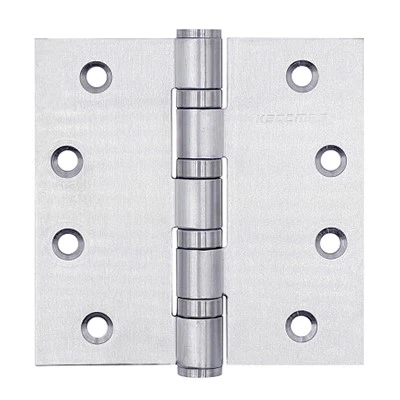
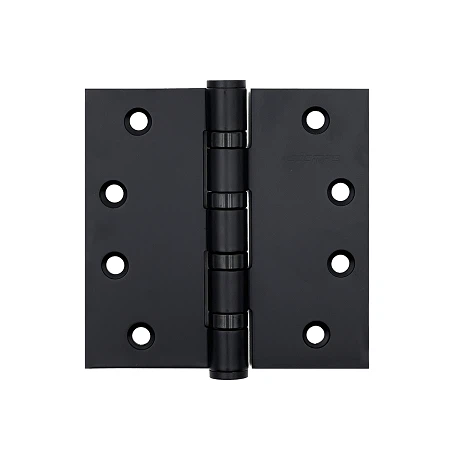
4 Inch Door Hinges 2 Pack
Introduction Choosing the right door hinges is crucial for ensuring smooth operation and long-lasting performance. KSDCMRS Stainless Steel Hinges are designed to meet these needs with their


Lightweight
When compared to hinges made of other materials, Hinges are lightweight. Most hinges, for instance, weigh about one-third the weight of their stainless steel counterparts. With their lightweight properties, they are easy to install and remove.
Corrosion Resistant
Hinges are also resistant to corrosion. They can withstand humidity and moisture without succumbing to oxidation. Aluminum is actually immune to rust. Rust is an oxidation-related phenomenon that only occurs with iron and iron alloys. There's no iron in aluminum, so aluminum hinges can't rust. At the same time, they are highly resistant to other forms of corrosion. Their corrosion-resistant properties make aluminum hinges ideal for exterior doors.
Durable
Another benefit of choosing hinges is durability. Some people assume that because hinges are lightweight, they are weak and prone to damage. The truth is that hinges are very durable. Many automakers use aluminum for various components, including engine components, because of the metal's high level of durability. Hinges exhibit this same durability. They can withstand the weight of connected doors and objects without cracking or otherwise sustaining damage.
Recyclable
Hinges can be recycled. Aluminum is actually 100% recyclable. It can be smelted down for use in other applications. If you decide to replace a set of hinges in the future, you can rest assured knowing that they can be recycled. Aluminum will retain all of its properties after being smelted down, thus allowing hinges to be fully recycled.
Inexpensive
Buying hinges won't break your bank account. Whether you intend to use them for recreational or commercial purposes, you'll have to buy them. With that said, hinges often cost less than hinges made of other materials. Because of its recyclable properties — along with the fact that aluminum is an abundant metal —hinges are inexpensive.
Types of Hinges
Ball-bearing Hinges
Instead of the usual journal-bearing type, knuckle-and-pin assembly, ball bearings are used primarily to reduce friction. Ball bearings minimizes friction by decreasing the point of contact between rubbing surfaces while providing support for radial and axial loads.
Block Hinges
These are generally heavy-duty hinges attached to the parts either through welding or bolting. A block hinge has a barrel made of galvanized steel with a thick, square profile held together by a pin made from stainless steel for additional corrosion resistance.
Bullet or Barrel Hinges
This type of hinge is composed of two barrels with one attached to each of the parts. Separating the barrels is a low friction bushing or another barrel. Bullet hinges do not have a leaf for attachment; rather, it uses welded joints. Bullet hinges have the advantage of being installed at narrow frames while providing strong support.
Butt Hinges
A butt hinge, also known as a mortise hinge, is the most common type of hinge used on doors and windows. It is composed by a pair of leaves with several knuckles attached by a shaft or pin. One leaf is attached to a moving component (the door) while the other is attached to a fixed body (the door jamb). The only thing that is visible when the door or window is closed is the shaft that has a pin placed in it.
Butterfly Hinges
Butterfly hinges are like butt hinges but with added aesthetics to the design. They are usually used in furniture doors for adding decorative features where strength is not particularly important.
Concealed Hinges
Like barrel-type hinges, this type of hinge is usually used in furniture doors. This hinge consists of two parts, the hinge cup, and the arm. Concealed hinges, also called cup or Euro hinges, are complicated in construction and have several design features. They cannot be seen from the outside making the furniture have a continuous appearance. These hinges help in freestyle rotation and can open in a small radius.
Medical: Commonly used for heavy lead lined doors associated with radiation shielding, vault doors, neutron shielding and blast/ballistic room doors.
Research and Development: Heavy door hinges are used in research laboratories for the containment of radiation and safety of personal and civilians.
Military and Defense: Uses include armored vehicles, personal carriers, armored doors for secured areas and gun turrets.
Chemical Processing Plants: Various types of heavy duty stainless steel hinges are used on processing equipment and application machinery.
Containers: Heavy duty hinges are used in international and domestic shipping containers.
Illuminated Panels: Heavy duty hinges are used to support signage panels, illuminated wall cladding, and LED and LCD panels.
Construction: Gates, doors and other heavy panels on the job site or construction project.
Agricultural: Heavy duty hinges are used for gates and doors for livestock containment.
Industrial Security Gates
Heavy duty gate hinges are used in industrial access applications at petroleum and natural gas facilities, mining and secured storage facilities.
OEM Requirements
Heavy duty hinges are used for control cabinet doors, entry doors and gates, loading doors, etc. for original equipment manufacturers.
Marine Applications
Heavy duty hinges are used in many marine applications such as loading and unloading doors, personnel access/security doors and gates.
Leaf
This is the plate that extends laterally from the knuckle or barrel. This is the part that is being attached to the fixed or moving body either by screwing, welding, or gluing. The leaf attached to the moving part revolves around the pin.
Knuckle or Barrel
This is the hollow cylinder attached to the leaf where the pin is slid through. Considering the hinge as a machine element, the knuckle can also be referred to as a bearing.
Pin
The pin is the rod or shaft that runs through the knuckles which holds the leaves together.As shown in the figure, the flat surfaces are the leaves of a hinge. Each leaf is attached to the parts that are being joined. The knuckles, or holes that can be seen in the leaves, are used for screws and bolts to attach to the hinge.

How to Choose Hinges
Load
The load to be carried is a key factor to consider when specifying a hinge. This will determine the dimensions and the material required for the application. In obtaining the right load specification, it is important to consider not only the weight of the moving part, which is usually the part being carried, but also external and dynamic loads. Also, the door‘s center of gravity will cause a moment or torque onto the hinge. This moment may cause the door to eventually sag, especially when the door is wide and heavy.
Required or Allowable End Play
Some hinges have limited angular movement such as the geared continuous hinge. The part or may need to revolve a full 180° or just 90° depending on the application. Check if the space can accommodate the door swing and if the swing will affect access through the door. There are different types of hinges to choose from depending on the application.
Hinge Orientation
Hinge orientation is the direction of end play or how the hinge rotates or moves relative to the door. Hinges can be right-handed or left-handed. Choosing between right or left-handed hinges depends on the swing and type of the door.
Installation
Another factor to consider is the method of fastening the hinge to the moving and fixed parts. Hinges can be welded, bolted, or screwed on the frame which typically depend on the type of service or amount of load to be carried. Moreover, hinges can be installed with different mountings such as surface, concealed, flushed, overlayed, and so on.
Aesthetics
Hinges used for furniture and doors usually have good aesthetics imparted on them. This may mean decorative designs of hinges as what can be seen on butterfly and strap hinges. Also, aesthetics may also require hinges to be concealed so that the furniture will have a continuous, uninterrupted look.
Hinge Corrosion Resistance
The type of environment, whether outdoor or indoor, will affect the material specification of the hinge. For applications requiring corrosion resistance and high strength, stainless steel is the material of choice especially in salt environments. Plastic hinges are corrosion resistant also, but without the high strength. If stainless steel is too expensive, galvanized steel works as well. Brass and bronze offer good resistance against outdoor conditions and are suitable for decorative purposes because of their natural patinas.
Additional Features
Additional features are special characteristics of a hinge to allow or perform a specific function; for example, springs and pneumatic dampers for spring-loaded hinges. Multiple features can be designed to a hinge which can include pins, grease fittings, bearings, bushings, screw covers, etc.
Common Hinge Manufacturing Processes

Casting
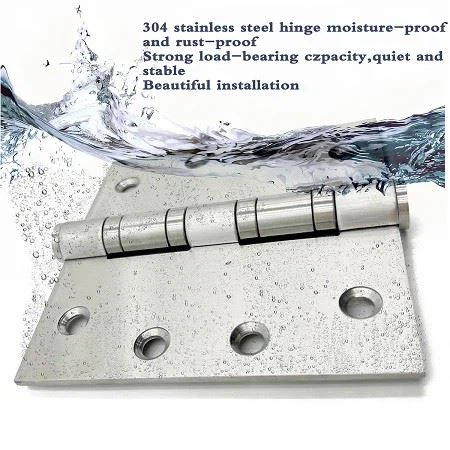
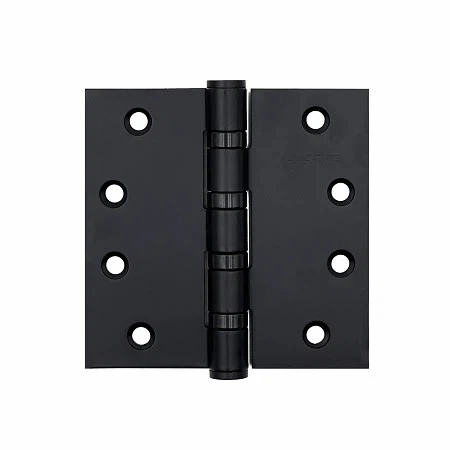
Casting is a process where liquid metal is poured into a mold cavity that contains the shape of the product. Casting is one of the earliest metalworking processes used to manufacture hinges. To create a cast hinge, a replica of the desired shape is made onto a piece of wood, metal, plastic, or plaster. For the barrel, an additional figure made of sand or metal shapes the internal to make it hollow. Next will be the preparation of the mold where a special type of sand is packed around the pattern contained in a frame called flask. Once the sand is packed, the hinge pattern can then be removed.
Extrusion
Extrusion is a metalworking process (although applied on plastics as well) where the metal is forced through a die with a desired cross-section. The resulting shape will have a fixed cross-sectional profile. To create a butt hinge, this extruded metal is then milled and cut according to the required leaf length and pitch. Geared continuous hinges, on the other hand, does not need further milling since its cross-section is fixed throughout its length. Aluminum is the material commonly used for extruded hinges. The gauge of the hinge can easily be made thicker by using a die with thicker hollow sections, thus making the hinge stronger.
Forming (Stamping)
Metal forming a hinge involves a thin blank sheet which is cut and subjected to plastic deformation using forming tools such as rollers and dies. Like casting, metal forming through hot forging is one of the earliest methods for producing metalworks. A common forming process is stamping where blanks are pressed onto a die. The dies are designed so that the required pressure exerted will accurately produce the required shape of the hinge. Stamped hinges have higher dimensional precision that can be produced at a lower cost than casted and extruded hinges.
Cutting or Milling
This process involves removing excess material from a metal workpiece using lathes, shapers, drills, or milling machines. Milling is commonly used for producing hinges with precise dimensions. Milled hinges can be made thicker, similar to the casting and extruding process.
Installation of Hinges
One thing must be considered before installing hinges. It is important to maximize the distance between two hinges, as it helps to minimize the load capacities and prevent door sagging.
How to Maintain Hinges
Gather Your Supplies
Before diving into the maintenance process, gather all the necessary supplies. Here's a detailed list of what you'll need:These will be used for both cleaning and polishing the hinges.Opt for a gentle dish soap to avoid any harsh chemicals that might damage the gold finish.
Remove the Hinges
To clean your gold hinges effectively, it's best to remove them from the door or cabinet. The process may require the use of a screwdriver or other appropriate tools, depending on the type of hinges you have. As you remove the hinges, be sure to keep track of any screws or fasteners, as you will need them for reinstallation.
Rinse and Dry Thoroughly
Proper rinsing and drying are crucial to prevent soap residue and water spots from marring the gold finish. Here's how to do it effectively:After cleaning, rinse the hinges thoroughly with clean, warm water.Use another lint-free cloth to dry the hinges meticulously. Ensure there are no water spots or moisture remaining on the surface.
Regular Maintenance
To ensure the long-term beauty and functionality of your gold hinges, consider incorporating these maintenance practices into your routine:Dust and dirt can accumulate on the hinges over time. Wipe them down regularly with a soft, dry cloth to prevent build-up.When cleaning the surrounding area, avoid using harsh chemicals or abrasive cleaners that can damage the gold finish.Gold can be sensitive to moisture. Avoid exposing your gold hinges to excessive humidity or direct water contact, as it can cause tarnishing or corrosion.If your hinges are on cabinets or furniture that frequently move, consider using felt pads or bumpers to reduce friction and protect the hinges.
Our Factory


FAQ
We're professional hinges manufacturers and suppliers in China, specialized in providing high quality customized service. We warmly welcome you to buy high-grade hinges made in China here from our factory.
4in x 4inch stainless door hinges, 4 inch door hinges 2 4pack, 4 inch stainless steel door hinges 2 pack